

Residents say management won’t fix mold problem in south Charlotte apartments
[ad_1]
Residents at a southeast Charlotte apartment complex say management won’t fix mold problems that have lasted for months.
A resident, who wanted to be identified as Nicole, contacted Channel 9 after she said she had spent months trying to get the mold removed.
ALSO READ: Mother says daughter’s asthma worsened after mold discovered in school
Nicole said she hasn’t had any luck getting help from property management at Crest on Providence in Providence Square.
“The smell is really bad, hence, why I have my mask on,” she said as she showed Channel 9 a neighbor’s apartment.
Nicole’s neighbor, who gave her permission to go into the apartment, has moved into another apartment.
Inside the old apartment, mold could be seen growing on air-conditioning vents. Watermarks were on ceilings and walls and mold spores were on the carpet and walls.
“It really makes me angry, because no one should have to live like this,” Nicole said.
She said Blake Bouldin, a mold inspector with Integrity Environmental Solutions, has inspected her apartment and her neighbor’s apartment.
Channel 9 met Bouldin at the complex and he took us on a tour. Bouldin explained how bad the mold was inside the apartment.
“You can see all of the mold growth that’s on that vent,” he said, pointing a flashlight. “What happens is, the air pushes through that vent, there are spores that are on this mold right here, and they enter into the air.”
He then used an infrared light on the carpet, which showed more mold.
“So, this carpet is undoubtedly filled with mold spores,” he said.
Then, he opened a vent inside the apartment, which was dark gray and filled with dust and mold.
Nicole believes the mold that has built up in her home is from flooding that seeps into her foyer when it rains. Video she shared with Channel 9 shows how deep it can get.
“It is unsafe,” she exclaimed.
Bouldin said he tested Nicole’s apartment for mold and found roughly 15,000 mold spores. He said a normal level would be a few hundred spores.
“It can be problematic,” he said.
Nicole believes her kids could be getting sick from the mold, with many of them suffering from respiratory problems, she said.
ALSO READ: West Rowan Middle extends remote learning to Sept. 9 after mold discovered at school, officials say
“I mean, they really need to take a look at this,” Nicole said. “Mold is a serious issue and it has impacting effects on people’s health.”
Channel 9 reached out to the complex to ask about the issues and if they would be addressed.
A spokesperson said in a statement, “We are aware of concerns raised by a few residents at Crest on Providence and have proactively taken significant steps to address them. We also expanded our on-site team with a full-time staff member focused on addressing code compliance and major repairs at the community. The well-being of residents at all of our communities is our top priority.”
VIDEO: Viral TikTok shows mold in Myrtle Beach resort room
[ad_2]
Source link
Residents say management won’t fix mold problem in south Charlotte apartments – WSOC TV
[ad_1]
CHARLOTTE — Residents at a southeast Charlotte apartment complex say management won’t fix mold problems that have lasted for months.
A resident, who wanted to be identified as Nicole, contacted Channel 9 after she said she had spent months trying to get the mold removed.
Nicole said she hasn’t had any luck getting help from property management at Crest on Providence in Providence Square.
“The smell is really bad, hence, why I have my mask on,” she said as she showed Channel 9 a neighbor’s apartment.
Nicole’s neighbor, who gave her permission to go into the apartment, has moved into another apartment.
Inside the old apartment, mold could be seen growing on air-conditioning vents. Watermarks were on ceilings and walls and mold spores were on the carpet and walls.
“It really makes me angry, because no one should have to live like this,” Nicole said.
She said Blake Bouldin, a mold inspector with Integrity Environmental Solutions, has inspected her apartment and her neighbor’s apartment.
Channel 9 met Bouldin at the complex and he took us on a tour. Bouldin explained how bad the mold was inside the apartment.
“You can see all of the mold growth that’s on that vent,” he said, pointing a flashlight. “What happens is, the air pushes through that vent, there are spores that are on this mold right here, and they enter into the air.”
He then used an infrared light on the carpet, which showed more mold.
“So, this carpet is undoubtedly filled with mold spores,” he said.
Then, he opened a vent inside the apartment, which was dark gray and filled with dust and mold.
Nicole believes the mold that has built up in her home is from flooding that seeps into her foyer when it rains. Video she shared with Channel 9 shows how deep it can get.
“It is unsafe,” she exclaimed.
Bouldin said he tested Nicole’s apartment for mold and found roughly 15,000 mold spores. He said a normal level would be a few hundred spores.
“It can be problematic,” he said.
Nicole believes her kids could be getting sick from the mold, with many of them suffering from respiratory problems, she said.
“I mean, they really need to take a look at this,” Nicole said. “Mold is a serious issue and it has impacting effects on people’s health.”
Channel 9 reached out to the complex to ask about the issues and if they would be addressed.
A spokesperson said in a statement, “We are aware of concerns raised by a few residents at Crest on Providence and have proactively taken significant steps to address them. We also expanded our on-site team with a full-time staff member focused on addressing code compliance and major repairs at the community. The well-being of residents at all of our communities is our top priority.”
VIDEO: Viral TikTok shows mold in Myrtle Beach resort room
©2022 Cox Media Group
[ad_2]
Source link
Students return in-person to West Rowan Middle School
[ad_1]
ROWAN COUNTY, N.C. — Students at West Rowan Middle School returned to the classroom for in-person learning Monday. It comes after mold was found in the HVAC system last month, forcing the school to send students home for remote learning.
Custodial staff reported microbial growth in the HVAC system earlier in August and the district began testing the building for mold and other issues.
Tests for mold came back negative on Aug. 17, but further test results indicated additional cleaning was necessary.
The school cleaned the system and retested it before students could return. Staff returned Thursday, Sept. 15, to get ready for students ahead of the official return date. The middle school is welcoming students back with a Spirit Week.
Testing for mold and other issues will continue throughout the school year.
All of WCNC Charlotte’s podcasts are free and available for both streaming and download. You can listen now on Android, iPhone, Amazon, and other internet-connected devices. Join us from North Carolina, South Carolina, or on the go anywhere.
[ad_2]
Source link
West Rowan Middle School returning to school after microbial growth found in HVAC system
[ad_1]
SALISBURY, N.C. (QUEEN CITY NEWS) – Students and staff will soon return to West Rowan Middle School after being diverted to remote learning due to microbial growth found in the HVAC system.
Staff will return beginning Thursday, Sept. 15, and students will return Monday, Sept. 19, the Rowan-Salisbury School System said.
Contractors are nearing the end of their cleaning and mitigation work needed to ensure the school is ready to go. The timeline will allow for sanitization and cleaning to be completed and for staff to put things back to prep for students’ return, officials said.
Get breaking news alerts with the Queen City News mobile app. It’s FREE! Download for iOS or Android
One West Rowan Middle School student, Pedro Roque, a few weeks ago, said he saw the mold before the school closed.
“It was on the walls of the bathroom,” he said. “It was in between the cracks of the bricks. You could see it getting more and more throughout the days.”
BE THE FIRST TO KNOW: Sign up here for QC News Alerts and get breaking news sent straight to your inbox
Officials urge that safety is the school’s top priority; they will continue to monitor the air quality in the building with regular environmental testing after students and staff return.
[ad_2]
Source link
In-person learning return date announced for West Rowan Middle
[ad_1]
“The safety of our students is our top priority,” the district said, in part, in a statement.
ROWAN COUNTY, N.C. — Students and staff will soon return to West Rowan Middle School, the district confirmed Friday.
Staff will return first on Thursday, Sept. 15, then students will return on Monday, Sept. 19.
The school was forced to implement remote learning last month after mold was found in HVAC units.
RELATED: Microbial growth found at Rowan middle school, remote learning extended
District leaders said the current return plan allows time for cleaning and sanitization to be completed and will give staff extra time to get things ready for students.
For the latest breaking news, weather and traffic alerts, download the WCNC Charlotte mobile app.
“The safety of our students is our top priority,” the district said, in part, in a statement. “We will continue to monitor the air quality in the building through regular environmental testing after students and staff return to the building.”
ALSO ON WCNC CHARLOTTE: School bus brawl escalates after parents fight, Chester County deputies say
ALSO ON WCNC CHARLOTTE: Gaston County School employees protesting for correct pay
PODCASTS FROM WCNC CHARLOTTE
Flashpoint is a weekly in-depth look at politics in Charlotte, North Carolina, South Carolina, and beyond with host Ben Thompson. Listen to the podcast weekly.
SUBSCRIBE: Apple Podcasts || Spotify || Stitcher || Google Podcasts
Locked On is the leading podcast network for local sports and is owned by WCNC Charlotte’s parent company TEGNA.
Listen to Locked On here.
Wake Up Charlotte To Go is a daily news and weather podcast you can listen to so you can start your day with the team at Wake Up Charlotte.
SUBSCRIBE: Apple Podcasts || Spotify || Stitcher || TuneIn || Google Podcasts
All of WCNC Charlotte’s podcasts are free and available for both streaming and download. You can listen now on Android, iPhone, Amazon, and other internet-connected devices. Join us from North Carolina, South Carolina, or on the go anywhere.
[ad_2]
Source link
VPET opening new SC plant
[ad_1]
VPET USA LLC is spending nearly $11 million to create a new blow molding and injection molding site in South Carolina that’s expected to begin operations next month.
The new operation in Greer will create 40 jobs.
“This new production facility both aligns with and complements our business growth strategy and provides us with the capacity to support our growing customer base,” CEO Jeff Kellar said in a statement.
VPET makes custom and stock bottles and wide-mouth PET containers for the food and beverage, nutrition, personal care, pharmaceutical and health care segments.
The new location initially will provide blow molding and injection molding services to customers in the Southeast.
VPET was No. 22 in Plastics News’ most recent ranking of North American blow molders with $120 million in sales. Its injection molding operations include investments in new presses in 2021 to mold PET preforms.
Other VPET locations are in Fontana, Calif.; Romeoville, Ill., and Garland, Texas. The company also has in-house packaging production sites at other companies’ locations around the world.
VPET is owned by private investment firm Graham Partners of Newtown Square, Pa.
[ad_2]
Source link
Deep cleaning continues after mold found at Rowan County school
[ad_1]
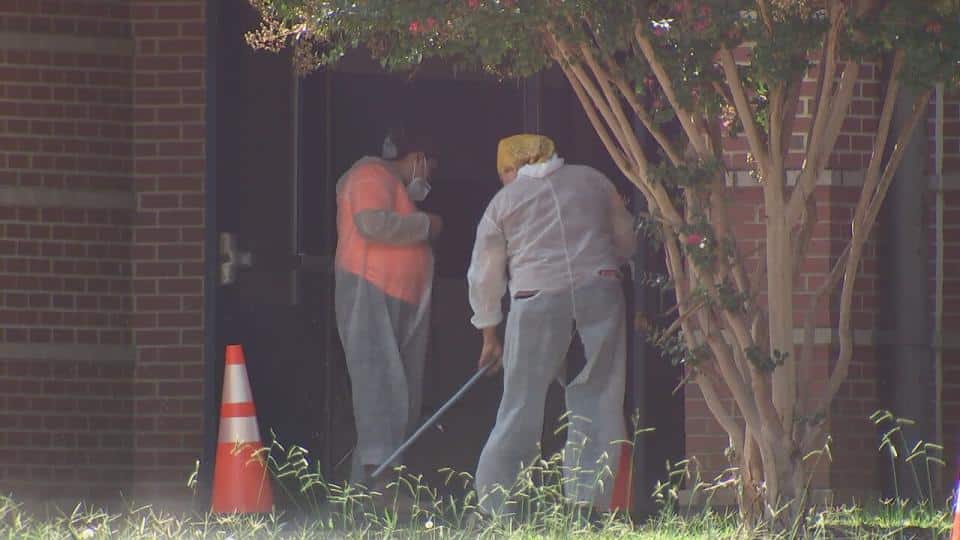
A Rowan County middle school is in its third week of remote learning while crews work to clean mold found in the HVAC system.
Channel 9′s Hannah Goetz has been following every development at West Rowan Middle School.
A spokesperson for Rowan-Salisbury Schools said they are making progress on the cleanup. Crews are working 12 to 14 hours a day, seven days a week on repairs and mitigation to get students back in the school, the district said.
“As cleaning progresses, we are receiving promising reports from initial testing, and we will provide a firm timeline for reentry to families on Friday,” the spokesperson said.
PREVIOUS COVERAGE: West Rowan Middle extends remote learning to Sept. 9 after mold discovered at school, officials say
Channel 9 learned last month that the school would have to throw out every ceiling tile in the building. The Centers for Disease Control and Prevention said ceiling tiles that remain wet for extended periods can harbor mold.
“I know that we are currently having our contractors working 84 hours a week,” said Anthony Vann, chief operations officer for the district.
Goetz saw workers in masks and jumpsuits sweeping outside the school and long vents running inside during the first week of cleaning in late August.

“And this is what they do. They, they clean facilities,” Vann said.
School officials won’t name the company doing the work, but there were DUCTZ vans in the parking lot. The company’s website said it specializes in HVAC restoration, air duct cleaning and indoor air quality.
Timeline
This all started on Aug. 3, when school officials said some suspicious growth was reported inside the building and that it was cleaned.
Then on Aug. 17, there were more reports of growth. That was tested and results on Monday showed two types of mold.
PREVIOUS COVERAGE: Mother says daughter’s asthma worsened after mold discovered in school
Those results led to the deep cleaning currently going on, but some parents are asking how it got this far.
“They knew something was happening. Why wasn’t it investigated before the school actually opened? Why couldn’t they delay school starting by two weeks and extend it by two weeks at the end?” said Amber Huneycutt.
With the return date now extended to Sept. 9, some parents are once again worried about remote learning setbacks.
On Sept. 6, the district told Channel 9 it will provide a firm timeline to families on Friday.
Remote learning concerns
Huneycutt said her heart goes out to all the families struggling during the unexpected stretch of remote learning.
“What about all these other children? What about the ones that don’t have internet or the ones that get lost in the translation of where are they? Are they being abused? Things like that?” she said.
Huneycutt said her two children were excited for school to start, but now said she’s worried that they will fall behind. She said her son did during remote learning due to COVID-19.
“It was awful. He was a sixth grader reading at a second grade level. He dropped to a kindergarten level because he just was not engaged,” she said.
ALSO READ: Viral TikTok shows mold in Myrtle Beach resort room
She said her son’s teachers are helping him make big strides in the classroom, but with that not being an option currently and both parents working, his little sister is doing her best to help out.
“I have to sit next to him and make sure he’s doing his work and I have to tell him, ‘You need to get on your school work,’” Honeycutt said. “It’s hard because you don’t have teachers sitting next to you to ask, ‘Hey, I need help.’”
School officials said there are other remote learning issues that it is also working to remedy.
Free lunches can be picked up at West Rowan Elementary School between 11 a.m. and 1 p.m. each weekday. And breakfasts will be provided with lunches on Mondays through Thursdays.
The school’s website lists virtual office hours, along with when and where students can access hot spots if they don’t have Wi-Fi at home.
The school will be evaluated again on Sept. 6 to determine if it’s safe for students to return.
For more information on free lunches being offered during remote learning, click here.
(WATCH BELOW: West Rowan Middle extends remote learning to Sept. 9 after mold discovered at school, officials say)
[ad_2]
Source link
District to re-evaluate after mold found in West Rowan Middle School – WBTV
[ad_1]
Students there have been learning remotely since Aug. 22 after mold found in the HVAC system forced them to go online. South Carolina …
[ad_2]
Source link
Mikhail Gorbachevs marriage, like his politics, broke the mold
[ad_1]
Mikhail Gorbachev’s grave in Moscow’s Novodevichy Cemetery lies next to that of his wife, Raisa, with whom he shared the world stage in a visibly close and loving marriage that was unprecedented for a Soviet leader.
“They were a true pair. She was a part of him, almost always at his side,” then Chancellor Helmut Kohl of Germany said at Raisa’s funeral in 1999, where Gorbachev wept openly. “Much of what he achieved is simply unimaginable without his wife.”
Also Read: Russians arrive in numbers for Gorbachev’s funeral, Putin missing | In Pics
Gorbachev’s very public devotion to his family broke the stuffy mold of previous Soviet leaders, just as his openness to political reform did.
“He loved a woman more than his work. I think he wouldn’t have been able to embrace her if his hands were stained with blood,” wrote Nobel Peace Prize winner Dmitry Muratov, editor of Russia’s leading independent newspaper, Novaya Gazeta. Co-owned by Gorbachev, it was forced to shut under official pressure after Moscow’s invasion of Ukraine.
“We should always remember,” Muratov continued, “he loved a woman more than his work, he placed human rights above the state and he valued peaceful skies more than personal power.”
Gorbachev’s open attachment to his family also stands in stark contrast to the secrecy that surrounds the private life of Russia’s current leader, President Vladimir Putin.
For her part, Raisa Gorbacheva cut a bold figure for Soviet first ladies — more visible, with a direct way of speaking, a polished manner and fashionable clothes. A sociologist by training, she had met Mikhail at a Moscow university where they both studied.
“One day we took each other by the hand and went for a walk in the evening. And we walked like that for our whole life,” Gorbachev told Vogue magazine in 2013. Raisa accompanied him on his travels, and they discussed policy and politics together.
Her confident demeanor and prominent public role didn’t sit well with many Russians, who had also soured on Gorbachev and blamed his policies for the subsequent breakup of the Soviet Union. The couple won sympathy, however, in 1999, when it was revealed that Raisa was dying of leukemia. Her husband spoke daily with television reporters, and the sometimes lofty-sounding politician of old was suddenly seen as an emotional, grieving family man.
For more than two decades after she was gone, Gorbachev kept Raisa’s memory alive and embraced his status as a lonely widower.
He released a CD of seven romantic songs, “Songs for Raisa,” in 2009 on which he sang along with well-known Russian musician and guitarist Andrei Makarevich. Sales went to the charities Raisa had founded. A few years later, he published a book dedicated to her, “Alone with Myself.”
Their marriage even became the subject of a popular play in Moscow in 2021, “Gorbachev.” Its point was one noteworthy for Russia: that the country’s leader was a human being who prioritized family, friends and personal obligations. One scene recounted a key moment in Gorbachev’s career when he returned to Moscow after the failed communist coup against him in 1991. Raisa had had a stroke, and instead of immediately stepping back onto the political stage, he went to the hospital to be with her.
“I was not married to the country — Russia or the Soviet Union,” Gorbachev wrote in his memoirs. “I was married to my wife, and that night I went with her to the hospital.”
At the Moscow cemetery, a life-size statue of Raisa has stood for many years now over the grave intended for them both.
The Gorbachevs had a daughter, Irina, two granddaughters and a great-granddaughter. Despite his attachment to family, Gorbachev lived out his life in Russia while they live in Germany.
Mikhail Khodorkovsky, a businessman in the early post-Soviet days who now lives in exile in London, tweeted this week that one of Gorbachev’s great strengths was his ability to wash away “awe of the person on the throne,” and that his attention to family was part of that.
“With this he changed my life. And also by his attitude toward Raisa Maximovna — a second important lesson,” Khodorkovsky said, using Gorbacheva’s patronymic. “He went to her. Rest in peace.”
[ad_2]
Source link
Gorbachev’s marriage, like his politics, broke the mold – KIRO 7 News Seattle
[ad_1]
Mikhail Gorbachev was laid to rest Saturday in Moscow’s Novodevichy Cemetery next to his wife, Raisa, with whom he shared the world stage in a visibly close and loving marriage that was unprecedented for a Soviet leader.
“They were a true pair. She was a part of him, almost always at his side,” then Chancellor Helmut Kohl of Germany said at Raisa’s funeral in 1999, where Gorbachev wept openly. “Much of what he achieved is simply unimaginable without his wife.”
Gorbachev’s very public devotion to his family broke the stuffy mold of previous Soviet leaders, just as his openness to political reform did.
“He loved a woman more than his work. I think he wouldn’t have been able to embrace her if his hands were stained with blood,” wrote Nobel Peace Prize winner Dmitry Muratov, editor of Russia’s leading independent newspaper, Novaya Gazeta. Co-owned by Gorbachev, it was forced to shut under official pressure after Moscow’s invasion of Ukraine.
“We should always remember,” Muratov continued, “he loved a woman more than his work, he placed human rights above the state and he valued peaceful skies more than personal power.”
Gorbachev’s open attachment to his family also stands in stark contrast to the secrecy that surrounds the private life of Russia’s current leader, President Vladimir Putin.
For her part, Raisa Gorbacheva cut a bold figure for Soviet first ladies — more visible, with a direct way of speaking, a polished manner and fashionable clothes. A sociologist by training, she had met Mikhail at a Moscow university where they both studied.
“One day we took each other by the hand and went for a walk in the evening. And we walked like that for our whole life,” Gorbachev told Vogue magazine in 2013. Raisa accompanied him on his travels, and they discussed policy and politics together.
Her confident demeanor and prominent public role didn’t sit well with many Russians, who had also soured on Gorbachev and blamed his policies for the subsequent breakup of the Soviet Union. The couple won sympathy, however, in 1999, when it was revealed that Raisa was dying of leukemia. Her husband spoke daily with television reporters, and the sometimes lofty-sounding politician of old was suddenly seen as an emotional, grieving family man.
For more than two decades after she was gone, Gorbachev kept Raisa’s memory alive and embraced his status as a lonely widower.
He released a CD of seven romantic songs, “Songs for Raisa,” in 2009 on which he sang along with well-known Russian musician and guitarist Andrei Makarevich. Sales went to the charities Raisa had founded. A few years later, he published a book dedicated to her, “Alone with Myself.”
Their marriage even became the subject of a popular play in Moscow in 2021, “Gorbachev.” Its point was one noteworthy for Russia: that the country’s leader was a human being who prioritized family, friends and personal obligations. One scene recounted a key moment in Gorbachev’s career when he returned to Moscow after the failed communist coup against him in 1991. Raisa had had a stroke, and instead of immediately stepping back onto the political stage, he went to the hospital to be with her.
“I was not married to the country — Russia or the Soviet Union,” Gorbachev wrote in his memoirs. “I was married to my wife, and that night I went with her to the hospital.”
At the Moscow cemetery, a life-size statue of Raisa has stood for many years now over the grave intended for them both.
The Gorbachevs had a daughter, Irina, two granddaughters and a great-granddaughter. Despite his attachment to family, Gorbachev lived out his life in Russia while they live in Germany.
Mikhail Khodorkovsky, a businessman in the early post-Soviet days who now lives in exile in London, tweeted this week that one of Gorbachev’s great strengths was his ability to wash away “awe of the person on the throne,” and that his attention to family was part of that.
“With this he changed my life. And also by his attitude toward Raisa Maximovna — a second important lesson,” Khodorkovsky said, using Gorbacheva’s patronymic. “He went to her. Rest in peace.”
Copyright 2022 The Associated Press. All rights reserved. This material may not be published, broadcast, rewritten or redistributed without permission.
[ad_2]
Source link