

College of Charleston Student Entrepreneur of the Year Breaks the Mold with FlipRings | National
[ad_1]
Charleston, South Carolina, June 16, 2022 (GLOBE NEWSWIRE) — It’s amazing what can result from a small flash of inspiration. For Nicole Birnbaum, a rising senior at the College of Charleston who’s majoring in communication, such a moment took place early in her freshman year. It was an epiphany that led to the creation of a successful commercial venture – FlipRings – and to her winning Student Entrepreneur of the Year for 2021-22.
Back in the fall of 2019, when the College was shuttered due to Hurricane Dorian, Birnbaum spent that week at home in New Jersey with her parents. Her father happened to have a black silicone ring that he used in place of his wedding band when working out or doing other activities. The younger Birnbaum wondered if rings like that were available in a range of colors.
“I found myself playing with that thing,” she recalls, “because silicone is stretchy and it’s just fun to play with. That made me wonder if I could find the same product available in other colors. I went online, but couldn’t find anything like that. At least it didn’t appear that anyone was making and marketing such products to people my age. So, I started thinking, ‘What if you could just have a ring with some fun, expressive words on it, kind of like those bracelets that used to be so popular a few years ago?’ That’s where it all started.”
When Birnbaum refers to “it all,” she’s being more than modest. Launched in the winter of 2020, her venture steadily gained popularity after the first models appeared. By the end of 2021, FlipRings had exceeded $500,000 in gross sales.
“Our first model had the word ‘coffee’ engraved on the outside and ‘tequila’ on the inside,” she explains. “Flip rings, right? You can reverse them inside or out. I love graphic design and designing things in general, so at that stage, I was just playing around. Eventually, I found a supplier and ordered some samples. I showed those to the women who were my roommates, but I didn’t tell them that I had created these things. They instantly loved the concept, and it just took off after that. The photos of them wearing the rings were the first elements of our marketing collateral for FlipRings.”
Birnbaum, who partnered with her dad to get FlipRings off the ground, has made effective use of social media – primarily Instagram – to promote the rings. She now has over 36,000 followers on that platform and some 30-plus student ambassadors at universities across the U.S. And all the while, she’s managed to keep a low profile.
“Initially, I wanted to create a kind of community around FlipRings,” she says, “and I wanted to get it out there that the person behind this was 19. But I didn’t really want people to know that it was me. So, I worked to make our Instagram presence personal and interactive. I think that was the right formula because we’re still doing really well with sales. And most of that is because our outreach speaks in the right tone to people my age. Essentially, what we’re offering is about self-expression and having fun, and I think that resonates.”
Just as FlipRings was getting off the ground, Birnbaum set up an account with the e-commerce platform Shopify.
“That’s right when a lot of people were spending a tremendous amount of time on the web because of the COVID-19 lockdown,” she explains. “The timing really helped a lot because the business just exploded at that point. I also think it’s important that my company puts a big emphasis on empowerment and moods. The whole idea is to help people show that moods change all the time, and that’s OK. FlipRings help people express themselves through an accessory.”
Last fall, to augment her business skills and pursue a minor in entrepreneurship, Birnbaum enrolled in the CofC course Introduction to Entrepreneurship. Over the initial weeks of that class, she grew to know the professor – David Wyman – fairly well. It was Wyman who recommended she enter the College’s Student Entrepreneur of the Year competition.
“I really wasn’t interested,” she recalls. “When he told me that I’d have to make a presentation in front of the judges and about 60 other people, I knew I didn’t want to do it. I have anxiety around public speaking, but Dr. Wyman insisted. He said the experience would be good for me. And, he was right. I learned that I can’t be nervous. I mean, FlipRings is my business and I know it thoroughly, so I just had to speak about it in a way that connected with the judges and the audience.”
Ultimately, Birnbaum’s presentation prevailed and she won top honors in that annual competition, walking away with the $1,000 prize. But more valuable to her are the lessons she learned and the connections she made in the process.
“I’ve learned a lot by running my own business and finding ways to promote it,” she says. “The contest was another aspect of that learning journey. And I’ve learned that there are lot of students at the College who are running small businesses. In fact, along with Billy Barlia and Oliva DeSisto (two other students in the Introduction to Entrepreneurship course), we’ve started a new club to support and encourage this – the Founders Club. We’ve only been active since January, but we’ve got about 15 members and everyone seems keen to keep it going next year.”
In the interim, Birnbaum will spend the summer dividing her time between Charleston and her home in New Jersey. She’ll continue to manage FlipRings, but says she doesn’t want to focus solely on that.
“I’ll also be doing a remote internship this summer,” she offers. “It’s a creative consulting role with an advertising agency based in California. I’ll help them with designs for events and ads for clients, doing things like picking color schemes and helping orchestrate events.”
And, what about her future as an entrepreneur?
“I don’t really have a plan,” Birnbaum says. “I don’t know if that’s good or bad; I’m just enjoying the moment. I’m expanding to other products. We’re now doing skull caps or flip beanies for winter and flip bucket hats for summer. But my business is so new. It’s only been two years, and I just want to see where it can go. I can do whatever I want with this enterprise, and that’s what I love about it.”
Attachments
College of CharlestonCollege of Charleston
Mike Robertson College of Charleston 8439535667 robertsonm@cofc.edu
[ad_2]
Source link
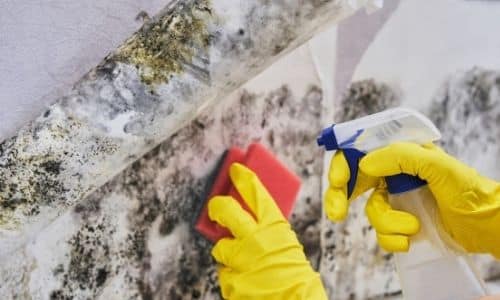
Presence of Mold after a Severe Weather Event In South Carolina
Presence of Mold after a Severe Weather Event:
- Excess moisture and standing water contribute to the growth of mold in homes and other buildings.
- Steps can be taken to prevent mold growth if wet items are cleaned and dried within 24 to 48 hours. Make sure you only enter your home once it is safe.
Signs of Mold:
- Mold can be recognized by sight or smell or present no signs at all (hidden behind walls or under floors)
- Sight (Mold growth often appears on walls and ceilings, looks like spots and can be many different colors)
- Smell (You may smell a strong unpleasant musty, earthy odor)
People at Greatest Risk for Health Effects from Mold:
- If you are allergic to mold, or you have asthma, allergies, or other breathing conditions, being around mold may make your condition worse.
- If you have a chronic lung condition or a weak immune system (such as people with HIV infection, cancer patients taking chemotherapy, and people who have received an organ transplant), you could be more susceptible to mold infections in your lungs.
Possible Health Effects of Mold Exposure:
- People who are sensitive to mold may have a stuffy nose, irritated eyes, wheezing, or skin irritation.
- People who are allergic to mold may have difficulty breathing or have shortness of breath.
- People with weakened immune systems or chronic lung diseases may develop mold infections in their lungs.
Cleaning Wet or Moldy Items after a Severe Weather Event:
- When your home is safe to enter, dry out your home as quickly as possible to minimize mold problems and perhaps even prevent the growth of mold at all.
- Water damage specialists or mold remediation companies have experience with cleanups of flooded homes and can provide you the peace of mind of knowing mold problems will be properly taken care of. At a minimum, a maintenance or service professional that is experienced in mold clean up should check and clean your home heating, ventilating and air-conditioning (HVAC) system before you turn it on. If the HVAC system was flooded with water, turning on the system may spread mold throughout the house.
- If you choose to perform clean up yourself, the U.S. Environmental Protection Agency (EPA) offers the following information:
- To protect yourself from potential exposure to mold, buy an N-95 or N-100 mask at your local home supply store and wear it while cleaning your home (an ordinary dust mask or handkerchief will not protect you from the mold)
- Hard-surfaced, non-porous items which do not absorb water can be cleaned using soap and water and disinfected with a bleach solution of no more than 1/2 cup of bleach in 1 gallon of water. (Never mix bleach with other household cleaners. Mixing bleach and ammonia can produce dangerous toxic fumes ). Nonporous materials include tile floors, countertops, showers, tubs, metal objects, plastic, glass, and other hard nonabsorbent materials and surfaces.
- Porous materials soak up water like a sponge. Items that cannot be dried thoroughly within 24-48 hours of getting wet are much more difficult to disinfect and may need to be replaced to prevent mold growth. Porous items include wood, drywall, carpet, mattresses, fabrics, and furniture made of particle board.
- Ensure that wood studs are completely dry prior to re-installing wallboard. If the wood is not completely dry, more mold can start growing behind the new wallboard.
- Use plastic to shield areas adjacent to where you are working so that spores disturbed by the clean-up don’t become reattached to a new substrate and grow. This includes sealing off nearby HVAC ducts, which often have sources of moisture and food for spores to grow.

Lawsuits: Mold, ventilation problems and structural issues at new townhomes in Mount Pleasant
MOUNT PLEASANT, S.C. (WCSC) – What should have been a new chapter in their lives has turned into a nightmare for some Mount Pleasant homeowners. Mold, ventilation problems and structural issues are just some of the complaints listed in lawsuits filed against the builder and HVAC contractor.
The Midtown Townhomes by Lennar are one of the newer builds in Mount Pleasant. It’s located off of Hungry Neck Boulevard and they’re listed as luxury townhomes. From the outside, many would think it’s true but neighbors say things have gone wrong.
“I started looking around, I mean opening closets, and I was just like ‘Oh my God,’” Kim Conway, who bought her townhome in 2020, says.
Conway says she was gone last summer for about six weeks. But when she came back, there was mold on every floor.
“My furniture, my bed, my mattress… everything was damp when I came home,” Conway says. “Like my sheets were wet. Everything was wet. And I lived in here for four days like this. And my furniture, these chairs… they had to come in and clean every piece of furniture. Everything. There was nothing left in this house.”
Conway says she had to move into a hotel while Lennar cleaned it up. According to documents from her attorney, it cost about $14,000.
She’s not the only one dealing with issues.
“I need to have the air conditioner work properly so that there’s not too much humidity in the house and it won’t blow constantly,” Karen Tinsley, who bought her townhome in 2021, says. “I think the unit is not the correct type of unit. I have a sink in the kitchen that’s cracked from the factory. I have a water heater that I’ve replaced because the plumber said that it was too small for my unit.”
Tinsley says she’s had problems since day one.
“My oven didn’t work properly. I have a gas stove and it was flickering so they had to go in the attic and make a bigger line for that. And I’ve had cracking of brick on the outside. There’s all kinds of wall problems upstairs. I have a bowed out floorboard and someone came in and said, ‘well we’re going to have to take out the wall because the plate and the wall isn’t attached to the sheetrock.’ So that means they’re going to have to come in and tear out the wall and fix that.
Tinsley says of the laundry list of items she has sent to Lennar to fix only about 25 percent has been done. And she’s wary if they’re actually done correctly. She says the most concerning thing to her, though, is the cracking bricks.
“I have these dreams where that my entire house is falling down from the outside and everything inside is all going to just fall down,” Tinsley says. “It’s like how scary is that? That’s what I’m stressed out about.”
All in all – neighbors just want their new homes fixed and for Lennar and the other companies to own up to the problems. That’s why they filed the lawsuits.
As of Thursday, the lawsuit against the HVAC company, Fogel Services, is pending in Charleston County. A federal court dismissed the lawsuit against Lennar for procedural reasons, but a motion for reconsideration of that dismissal is currently pending. Neither company has responded for a request for comment as of Thursday.
“I think Lennar should accept what they’ve done and they know they’ve messed up these buildings,” Conway adds. “They should fix them. They should be responsible and just fix them. And learn how to build.”
They’re also offering some advice to home buyers.
“I would say don’t rush into buying anything get an inspector,” Tinsley says. “Maybe get two inspectors. Get some advice from other people to go in and look at the history of the place. Don’t rush into a brand new construction because they’re taking shortcuts these days to sell.”
This isn’t the first lawsuit against Lennar. There are more than a dozen listed in Charleston County alone listed on the court’s website dating back more than a decade alleging similar problems.